
Small decisions—whether on a college campus or within global industries—can create meaningful environmental impact. From renewable energy arenas to plant-based packaging innovations, sustainability proves that incremental choices can drive worldwide change.
Last year, I was working full time at JJGP, where my days revolved around sustainability on a large scale. I spent my time researching how to eliminate plastic from paper packaging, how JANUS® could redefine the future of coatings, and how innovation can make entire supply chains more sustainable. It was work that made me realize how change is not just an idea — it is a system of small decisions that add up to something powerful.
Now, as a student at Bentley University, I’m seeing that same idea play out all around me, just in a different form.
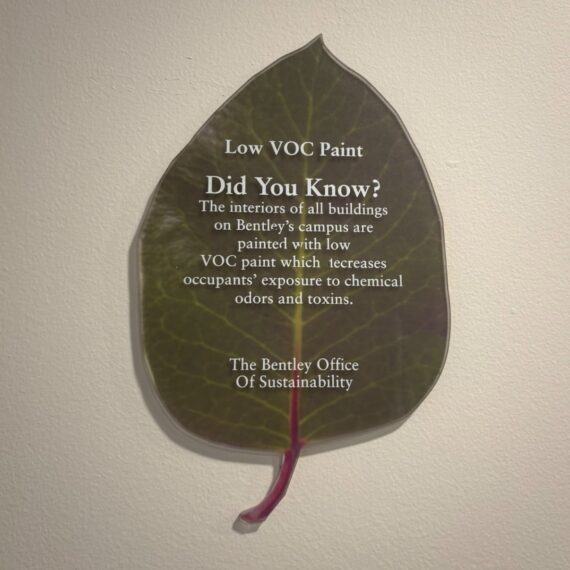
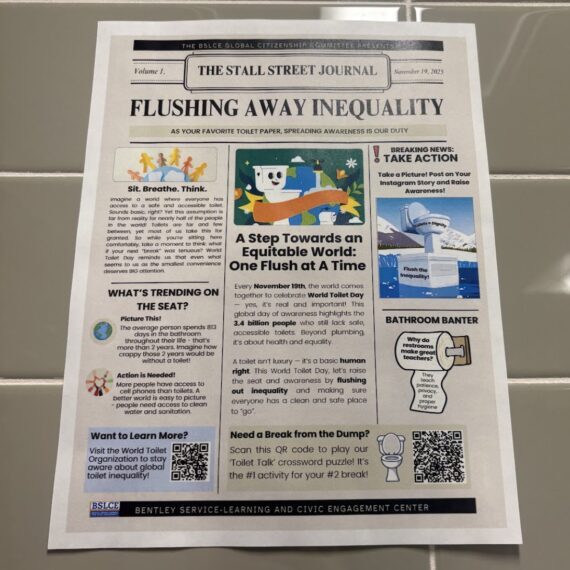
Even on campus, sustainability is part of daily life. Signs across buildings remind students how much water the university saves each year. LED motion sensors help conserve electricity. Dining halls promote reusable containers and composting.
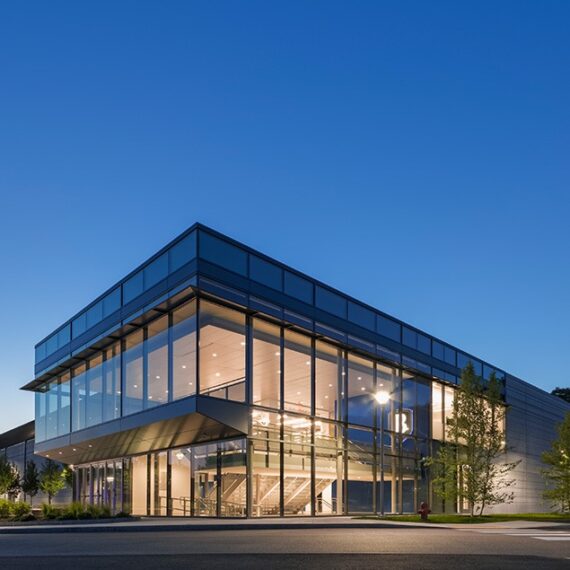
And perhaps most impressively, Bentley’s hockey arena, the Bentley Arena, was recognized as the Most Environmentally Sustainable Arena in the Nation.
The arena runs on renewable energy, uses reclaimed water to make its ice, and was designed to achieve LEED Platinum certification. To me, it’s more than just a beautiful building — it’s a symbol of what’s possible when sustainability becomes part of a community’s identity. And of course, it’s home to the best team in the Atlantic Hockey America League. Go Falcons!!
But sustainability doesn’t stop at the campus gates. It’s a global effort. Around the world, people, companies, and governments are rethinking what progress looks like.
In Amsterdam, The Edge is often called one of the world’s greenest office buildings. It generates its own energy through solar panels, stores rainwater for plumbing, and uses smart systems that adjust lighting and temperature based on occupancy.
In Denmark, more than half of the country’s energy now comes from renewable sources, a milestone that shows what happens when sustainability becomes a national priority rather than an individual choice. Denmark’s investment in offshore wind power and circular economy initiatives sets an example for what policy-driven progress looks like at scale.
Even the restaurant industry is getting involved. Copenhagen’s Noma, often ranked the best restaurant in the world, focuses on local sourcing and zero-waste practices, reusing ingredients in creative ways to minimize waste. Across continents, similar movements are happening in cities like Singapore, Tokyo, and New York, where innovation and responsibility go hand in hand.
Sustainability works on two levels: the micro and the macro.
On a micro level, it’s reflected in our daily choices—what we buy, reuse, or throw away. On a macro level, it’s in the systems that enable those choices: universities, companies, and governments that make sustainable living possible.
Each level relies on the other. Without people who care, systems stall; without systems that support sustainable behavior, people burn out.
That connection between the personal and the global is what inspires me most about sustainability. Whether it’s a company like JJGP working to replace plastic coatings with natural waxes, a university running on renewable energy, or a country reimagining its energy grid, progress always begins with one decision that creates ripples.
And while change can sometimes feel distant, here are some tangible examples of what’s happening around the world right now. They might not all be in your home, but they’re certainly in your backyard:
Each of these achievements reflects something bigger: the fact that progress doesn’t always come from one sweeping policy or invention. Sometimes, it comes from the combined effort of governments, industries, and people choosing to do things differently.
At J & J Green Paper, we’ve seen firsthand how innovation creates measurable impact. Through the development of JANUS, a 100% plant-based and compostable coating that replaces polyethylene, JJGP is helping set a new standard for sustainable paper packaging. Each trial and partnership represents a step toward eliminating plastic waste in the products we use every day. Sustainability isn’t just about big statistics; it’s about persistence, creativity, and the willingness to challenge what’s considered normal.
Change doesn’t have to happen in leaps. It often happens in layers — a refillable bottle here, a renewable coating there, a more efficient building across the city. Every one of those layers tells the same story: small, intentional choices build toward global transformation.
Whether on a college campus or within a global company, sustainability isn’t a single act. It’s a mindset — the quiet belief that every action counts, and that collective effort can change the world.
This blog draws on insights from Bentley University’s article “New Arena Named Most Environmentally Sustainable in the Nation,” the U.S. Plastics Pact Annual Report, and sustainability reports from the EPA WaterSense program and Ford Motor Company, which highlight how institutional initiatives, corporate innovation, and environmental policy are contributing to measurable progress in sustainability efforts worldwide.